How Caribbean Real Estate Agents Can Stay Visible During the Holiday Season
23 Oct
Please wait...
13 Apr
Best Caribbean islands for Eco-tourism
Are you planning a Caribbean vacation or dreaming of a tropical adventure? Many travelers come to the Caribbean for its beaches and sunshine. But those who venture beyond the resort gates discover something even more memorable: experiences that connect them with nature, community, and the islands' authentic culture.
Today, we explore one of the most fascinating sides of the Caribbean: its nature and its connection to the people. In the process, we break down the top islands for ecotourism and the best activities each offers.
Ecotourism is a practice that goes far beyond jumping on a kayak, camping by the ocean, or venturing into the wilderness. At its core, it is about enjoyment combined with respect and commitment to conservation. The following principles show their essence:
Nature gives us so much, from tranquil landscape contemplations to thrilling adventures through rapids, challenging mountains, and the azure waters of the sea. Ecotourism is focused on protecting these environments so we can continue to enjoy them for generations to come. This means avoiding pollution and littering, and treating the local flora and fauna with respect.
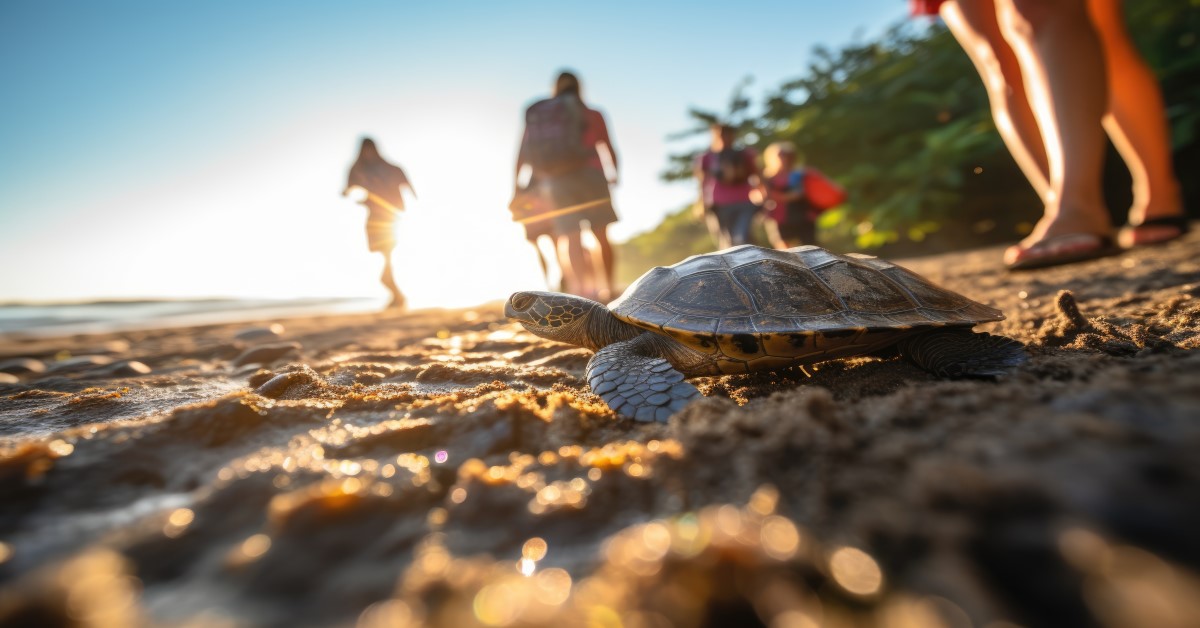
Seeing wildlife in its natural habitat, like wild horses, a turtle’s nest, or a hare’s form, can be truly fascinating. But our interactions can sometimes have harmful effects on these animals. That’s why it’s vital to respect the rules and avoid feeding wildlife, removing plants, or disturbing nests or burrows.
Much like the naturalists of the 19th century, many ecotourists become passionate advocates for the places they visit. Their extraordinary experiences in the wild, along the coast, or deep within forests can be shared on social media, on YouTube, or with friends and family. This creates a ripple effect: inspiring others to seek out similar adventures while reinforcing the importance of protecting these fragile habitats.
Nature and people have always been closely connected. Humans have adapted to their environments, and in turn, nature has evolved alongside them, creating a balance that sustains both. In many of the Caribbean’s most remarkable destinations, indigenous communities continue to live in harmony with their surroundings, adding a rich cultural layer to every ecotourism adventure.
A perfect example is the San Blas Archipelago on Panama's Caribbean coast. These islands are managed by the Kuna people, an indigenous community that has developed the archipelago into one of the country's most remarkable tourist destinations, while preserving their traditions and identity. With rustic accommodations and a genuinely sustainable model, free from large hotels and mass tourism, San Blas introduces the Caribbean in its purest form. While you're there, you also have the chance to get to know the Kuna people, their craftsmanship, their stories, their culture, and their traditions.
Ecotourism also plays an economic role by generating income that supports local communities while keeping environmental impact to a minimum. These financial benefits often fund conservation efforts, creating a positive, sustainable cycle that protects both biodiversity and local livelihoods over the long term.
Puerto Rico is home to three of the world's rare bioluminescent bays. Exploring them by kayak at night is one of the most memorable experiences in the Caribbean. Mosquito Bay, Laguna Grande in Fajardo, and La Parguera in Lajas are the three places where you can glide through waters that shimmer with a magical green glow with every stroke of the paddle.
This glow is produced by millions of microorganisms, called dinoflagellates. These organisms emit a bright blue light when the water is disturbed. There are roughly 700,000 to over a million of these dinoflagellates per gallon of water, creating a mesmerizing sparkling effect that looks like a glowing cloud just beneath the surface. If you are looking for an unforgettable encounter with the wonders of the tropics, this is, without a doubt, one of the best places to visit.
You can dive almost anywhere in the Caribbean, but only Dominica offers a one-of-a-kind experience at Champagne Reef, where volcanic bubbles rise from the ocean floor, creating the sensation of floating in a glass of champagne.
Dominica is called the Nature Island of the Caribbean for a reason. More committed to ecotourism and sustainability than to luxury, it combines volcanic mountains, lush forests, and pristine beaches to offer the ultimate tropical escapade. Dominica is a place unlike any other, offering exceptional hiking, therapeutic thermal baths, and an extensive coastline of about 91 miles.
The island is home to several national parks and reserves, including Cabrits National Park, Morne Trois Pitons National Park, and the Soufrière–Scotts Head Marine Reserve. It is in Soufrière–Scotts Head where you'll find some of the most unique diving in the entire Caribbean.
Champagne Reef’s location beside the volcanic crater of Soufrière Bay gives it an intricate underwater landscape. Steep walls, pinnacles, and various rocks create a rich composition of depth and texture, allowing marine life to thrive in full splendor.
Geothermal activity releases volcanic gases that rise from the seabed as streams of bubbles, making you feel like you are, indeed, diving inside a glass of champagne. Beside the bubbling area, a fringing reef slopes gradually downward, creating spellbinding formations and an ideal habitat for local wildlife.
A postcard from St. Lucia is instantly recognizable from any other. That is thanks to the Pitons, twin volcanic peaks that rise sharply from the ocean and define the island's distinctive silhouette. Both are climbable, and both reward the effort with unparalleled vistas.
Petit Piton, the smaller of the two, rises 2,438 feet and offers a very challenging hike that typically takes 3 to 5 hours round-trip (ascent and descent), depending on fitness level and pace. Gros Piton is taller at 2,619 feet and is generally considered easier, with most hikers completing the round-trip in 3 to 4 hours. Despite being larger and taller, Gros Piton offers an easier climb because its terrain is less steep and technically demanding.
If you still have energy after climbing the famous Pitons, consider the Tet Paul Nature Trail, widely regarded as one of the best and most rewarding hikes on the island. From its highest point, you'll enjoy a breathtaking 360-degree panoramic view: both Pitons, the entire southern coast of St. Lucia, and on a clear day, even distant neighbors like Martinique and St. Vincent.
For those who prefer a quieter approach to ecotourism, Trinidad and Tobago is paradise. It is the right place to just sit back and let the hushed sounds of the forest lull you.
The islands' proximity to South America means they receive migrant birds from the south, as well as species arriving from Europe and the Arctic.
At the Asa Wright Nature Center, nestled in the Northern Range, birdwatchers can spot over 180 bird species of astonishing variety. The Pointe-à-Pierre Wildfowl Trust offers the chance to observe and study endangered wetland birds, and it features an on-site rehabilitation clinic that cares for injured birds.
Highlights include the Trinidad Piping-Guan and the American White Ibis. For a truly spectacular moment, head to Pax Guest House to watch flocks of Scarlet Ibis arriving from Venezuela at dusk. This is one of the most extraordinary sights a birdwatcher can witness anywhere in the world: a traveling vibrant pink cloud moving across the skies, dyed with ochre and golden hues.
The best time to visit the Caribbean is during the dry season, from December through April, especially if you are into ecotourism. You will have the best chance of enjoying the nice weather for any of the above-mentioned activities, whether it is passive observation or active climbing. But don’t worry if you can't come during these months: the Caribbean is alluring, inviting, and inspiring at any time of the year.
Whenever you choose to make your trip, keep this in mind: the animals, plants, rivers, and oceans are part of a living world that welcomes us in. As visitors, we can show our appreciation by respecting these places, caring for them, and moving through them thoughtfully.
Safe travels!