Curacao's Colorful Streets and Growing Investment Appeal
17 Aug
Please wait...
17 Aug
Curacao's Colorful Streets and Growing Investment Appeal
Evoking the Caribbean is envisioning the iconic image of the turquoise waters lapping the sand, a row of towering palm trees, thatched kiosks, and beach bars. Yet colonial heritage is another constant across the islands, and in some of them, it takes on unmistakable characteristics.
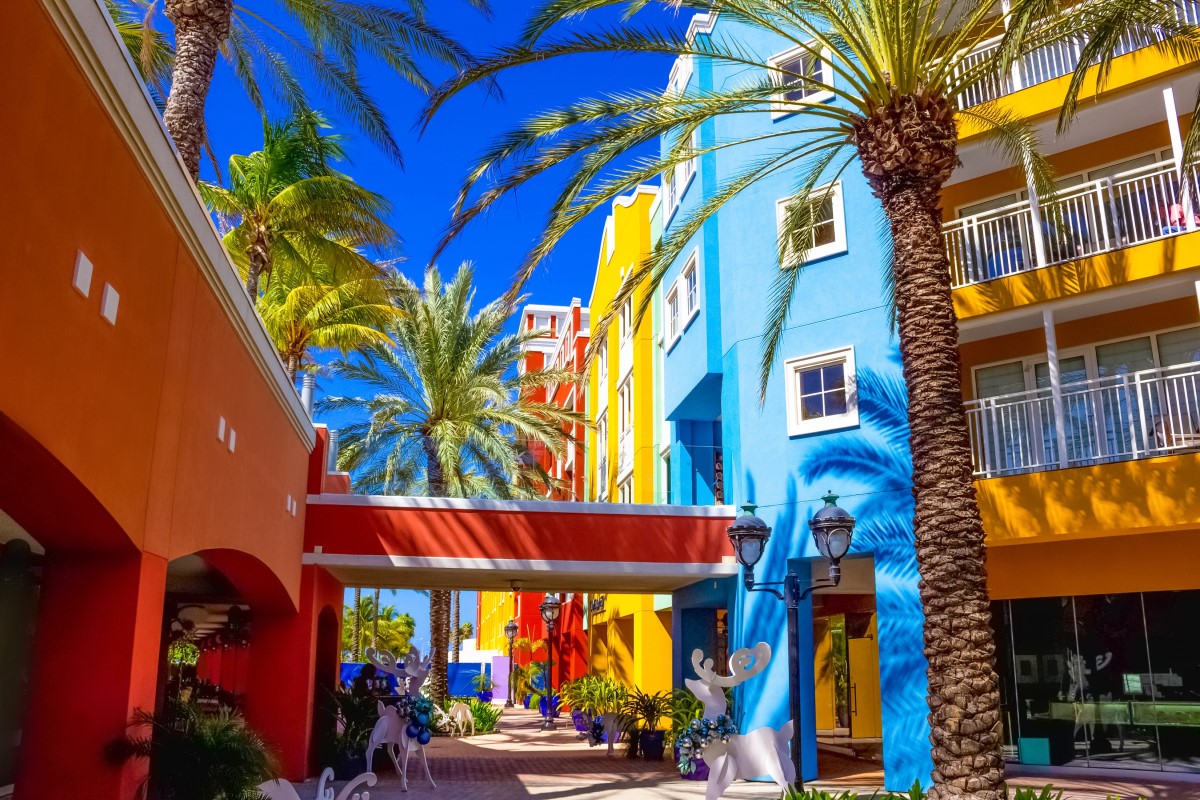
This architecture is what gives beachfront towns and capitals their distinctive character. Turning vibrant streets into backdrops for strolling, shopping, and nightlife that are just as captivating as the beaches themselves.
Today we look at Curaçao through that lens, taking a virtual walk down its most colorful districts and analyzing why it appeals to investors.
Willemstad's Painted Rows: A Legend that Became a People’s History
One of the first things that comes to mind when we think of Curaçao is that line of pastel 18th-century buildings resting by Santa Anna Bay. They are not the only ones of their kind. Colors abound all around town, from the chichi statues honoring the family's elder sisters to the creative-driven murals hiding among the wandering alleys.
Locals attribute this peculiar trait to a legend. In the 1800s, one of the governors is said to have suffered from migraines, which he blamed on the water glare bouncing off the white buildings across Santa Anna Bay. So, the story goes, he ordered them painted in different tones. There's also a more amusing theory that isn't entirely implausible: that the governor owned a paint factory and simply wanted to promote his products.
Whether it is true or not, the story certainly adds to the city's charm and the sense of mystery that surrounds it.
Curaçao's Growing Appeal for Investors and Real Estate Agents
Real estate agents are increasingly turning their focus toward Curaçao. Driven by the island’s expanding tourism sector and strong investment potential, Dutch investors, in particular, lead the demand. Buyers from the Netherlands prefer Curaçao because of their shared history, language, and cultural ties. Crucially, Curaçao offers a more flexible and predictable investment landscape than the Netherlands, where shifting regulations, strict environmental limits, and lengthy administrative procedures make projecting returns increasingly difficult.
Curaçao has another advantage over its siblings resting further north across the Caribbean: the weather. In short, it offers all the charm of the tropics, but without the annual threat of major tropical storms, all while enjoying cooling trade winds that temper the tropical climate.
With sunshine nearly year-round, a developed art scene, and quaint architecture, the largest of the ABC islands is winning over agents and investors alike.
The Real Estate Success
Curaçao’s appeal goes far beyond picturesque postcards; it is backed by record-breaking numbers. Annual aviation data highlights this momentum, with Curaçao International Airport recording a historic high of over 2.46 million passenger movements. This boom was driven by more than 1 million total passenger arrivals, including a landmark surge in stayover tourists.
For investors, this means higher demand for rental apartments and heavier traffic of people who might eventually transition from tourists to expats and buy property. The trend is undoubtedly fueled by recently expanded air routes from key capitals such as Lima, Panama, and Bogotá, as well as cities like Atlanta and Medellín. These add to the already existing and quite convenient connections with New York, Miami, Toronto, and Amsterdam.
Willemstad's Most Picturesque Districts
Now, to honor one of Curaçao's most striking features, here are the neighborhoods that draw visitors for their color and brightness. All of the following are in the area designated a UNESCO World Heritage Site in 1997.
Handelskade - Punda
Handelskade is where you'll find Curaçao’s most emblematic postcard view. A vibrant waterfront row of pastel, colonial-style buildings stretching along the St. Anna Bay channel. Positioned along a calm waterway rather than the open sea, they are even more enchanting, almost fairy-tale-like.
This was once the economic heart of the city, since the deep-water channel made loading and unloading cargo easy. It was the epicenter of Willemstad, where trade thrived, and merchants flourished. Those pretty buildings, now home to cafés, stores, restaurants, and shops, were once warehouses and merchants' offices.
The St. Anna Bay channel (Sint Annabaai) acts as a natural harbor that splits Willemstad, the capital of Curaçao, into two distinct historic quarters: Punda (meaning "The Point") on the east side and Otrobanda on the west side.
Otrobanda
On the other side of the canal lies Otrobanda, which means precisely "the other side" in Papiamento, the local Creole language. Otrobanda is worth a visit: from here, you can enjoy the best views of Handelskade. However, it doesn’t lack a spirit of its own.
Otrobanda is where visitors go to immerse themselves in local history and culture, a vibrant neighborhood filled with impressive street-art murals and home to the renowned Hotel Kura Hulanda. This is a hotel village built by Jacob Gelt Dekker in 2001, in a neighborhood that was falling into decay. Today it is a beautiful resort town, with spas, swimming pools, restaurants, and bars.
There's also the remarkable Rif Fort. Today, luxury boutiques, shopping malls, and a five-star hotel stand where there used to be a fortress: the Rif Fort was built in 1828 to defend the city, and in 2009, it became a commercial complex.
Otrobanda development came after Punda’s, to accommodate Willemstad’s expanding population. While Punda remained the bustling commercial center, Otrobanda evolved into a rich cultural district and has since transformed into a vibrant, art-driven neighborhood celebrated for its bohemian spirit and colorful street murals. These murals telling the stories of the people and their traditions abound among the intricate alleys, especially around Kaya Kaya Street and Hendrikssteeg.
Pietermaai
Pietermaai is Curaçao's trendiest district, a blend of bohemian spirit and classic luxury. You can see this distinctive quality in the sumptuous façades. The buildings reveal the island's Dutch heritage while sporting the vibrant pastel palette quintessentially Curaçaoan.
For tourism-oriented real estate investment, this place is a genuine jewel, packed with bars, cafés, shops, boutiques, and gourmet restaurants. It's especially attractive for its active nightlife of bars, discos, and live music.
Chichi Statues Across the City Honor Family Traditions
Another eye-catching touch of the island's artistic personality comes to life through the chichi statues, easily spotted in squares and busy intersections. They depict colorful, hand-painted figures featuring voluptuous women with open arms and bright floral patterns, a warm symbol of community and comfort.
In Curaçao, family members have their own nicknames according to the role they play at home. "Chichi" is the affectionate name given to a family's cherished elder sister figure, understood as a generous, giving woman. Traditionally, she supports the household with its tasks and management and helps raise the younger siblings.
Created by local artist Serena Israel, these figures have now evolved into a thriving community movement. Local women are trained to handcraft and paint the souvenir-sized versions, while larger-scale sculptures are crafted by artisans and displayed throughout the streets of Willemstad.
Add Willemstad to Your Real Estate Listings
The canals of Amsterdam may be thousands of miles away, but Curaçao’s waterfront carries that same Dutch charm, reinterpreted through a vibrant Caribbean lens. Beyond this cultural connection, pragmatic financial incentives and familiar legal frameworks make the island a top choice for Dutch real estate investors.
Real estate agents looking to expand internationally may want to consider Curaçao’s market.
Historically, Dutch buyers have led the market, however, investors from North America and Europe are rapidly discovering the island's potential. They are jumping in, driven by record-breaking tourism, stable governance, and a booming market.
Curaçao isn't just a hidden Caribbean gem anymore; it's a prime investment hub, and the timing couldn't be better.