The Smart Island Home: Must-Have IoT Devices to Monitor and Control Your Property From Anywhere in the World
14 Sep
Please wait...
14 Sep
The Smart Island Home: Must-Have IoT Devices to Monitor and Control Your Property From Anywhere in the World
If you're managing your rental from abroad, you may miss key moments like guest check-ins and check-outs. And even the best rental manager can make mistakes, like leaving the AC on. The master’s eye fattens the horse, or, in this case, it keeps it groomed, clean, and optimally fed, ready for the next ride. Homeowners who like to keep things in check from a distance can rely on smart home technology, which can also help them trim their bills considerably.
Smart Home and Remote Control: How They Work
A robust smart property ecosystem goes far beyond basic Bluetooth lightbulbs. To maximize guest security and operational efficiency, a fully integrated smart home architecture needs four key layers: a central hub, a reliable network, intelligent sensors, and connected devices (such as keyless locks and smart thermostats).
The Hub (or Controller)
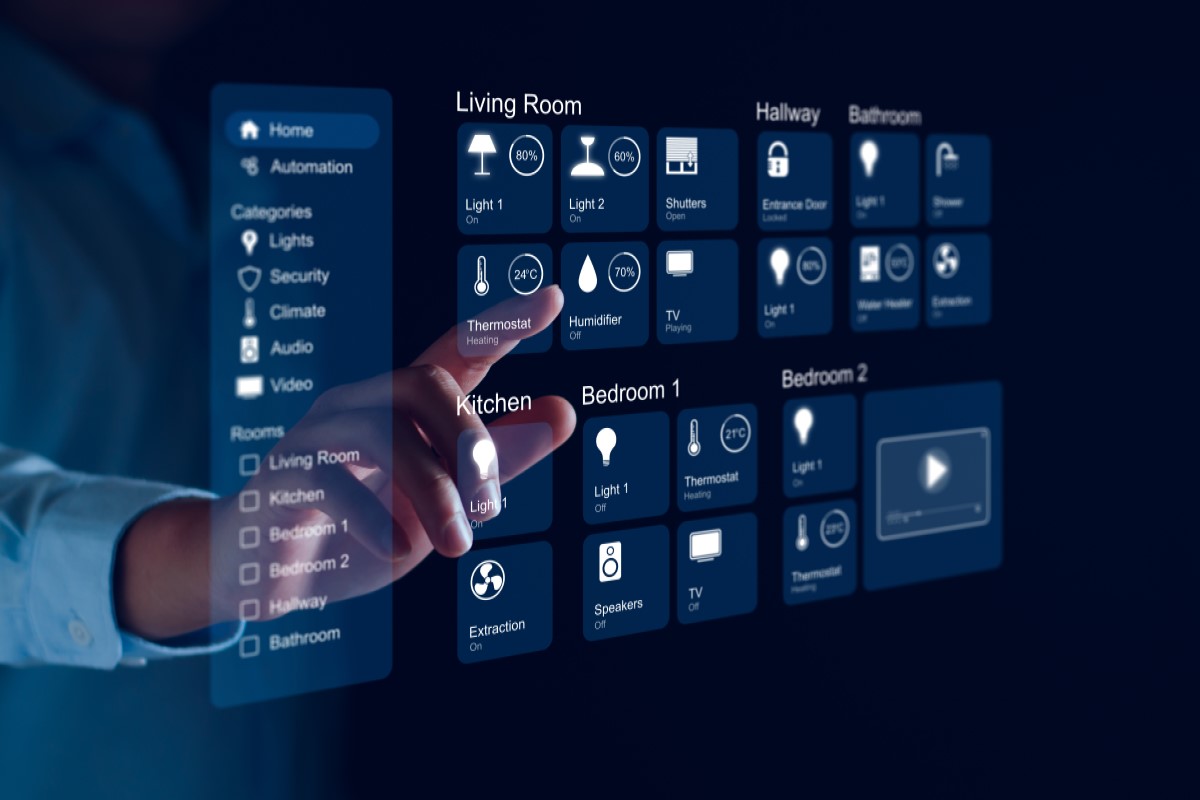
Many people use platforms like Google Home, Amazon Alexa, or Samsung SmartThings without realizing they are using a central smart home controller. The hub acts as the brain of your property. The software and hardware engine that connects isolated smart devices and lets you control them from a single smartphone app or dashboard.
While basic Wi-Fi gadgets can function on their own, a central hub is what makes a home truly "smart." It allows property managers to build custom automations, such as adjusting thermostats between guest stays, triggering entrance lights upon keyless entry, or sending real-time security alerts.
A Network
A smart property network acts as the communication highway between your devices and your smartphone app. Simple Wi-Fi gadgets connect directly to your router, but adding too many can quickly slow your internet connection.
To avoid network congestion, high-performance platforms like Philips Hue or Lutron Caséta use a dedicated "bridge." A bridge is plugged directly into your network router and handles device-to-device communication on its own dedicated channel. Though slightly more expensive, bridge-backed networks deliver much higher reliability, zero lag, and seamless multi-device automation.
Sensors
Sensors serve as the eyes and ears of a smart home. They gather data, such as temperature, ambient light, water leaks, or motion, and report it directly to the hub. Sensors make real-time automation possible by turning entryway lights on automatically when motion is detected, by dialing back air conditioning when patio doors are left open, or by adjusting smart thermostats when a room is unoccupied.
The Devices
Devices are the actuators of your smart ecosystem, the hardware that actually executes commands. Powered either by household wiring or long-life batteries, almost any fixture can be automated, including smart keyless locks, connected thermostats, motorized shades, security cameras, smart lighting, and automated water shut-off valves.
How Smart Home Automation Helps Homeowners Manage Properties Remotely
Remote management is where smart technology pays off the most. By integrating connected devices, such as keyless locks, smart thermostats, and security sensors, owners are able to monitor and control their properties from anywhere in the world.
Turn off the Air Conditioning When Your Guests Leave: Wi-Fi-enabled HVACs
Nobody likes to get an astronomical bill because their tenant mistakenly left the air conditioning on. The most state-of-the-art HVAC equipment today comes with integrated app-controlled features and connects to your bridge or hub through Wi-Fi or other protocols.
If you already own an AC and aren't ready to replace it, you can make the existing one smarter. One option is to buy an intelligent plug and connect it, though it has some downsides. Firstly, it cuts the power abruptly instead of shutting the system down properly. Second, most modern air conditioners don't return to their last setting once the power is cut.
Always the Right Temperature at the Right Moment: Automated Thermostats
Instead of shutting down your HVAC system remotely, you may want to turn it on. This is not uncommon for owners with properties in cold regions. If they are staying in their Caribbean vacation villa, they can detect that the temperatures back home have gotten dangerously low and might freeze the pipes.
They can then turn up the heat just enough and only as long as necessary. The same works the other way around, for owners who want to prevent their ceiling from cracking or their wallpaper from peeling in tropical climates.
Thermostats can also help you save energy while you are at home. You can set up automated actions when the temperature drops or increases, or activate your AC an hour before you get home. If you choose a thermostat with geofencing, you won’t even need to switch it on remotely: these thermostats connect to an app on your smartphone, which lets them know when you are approaching or leaving the house.
The more advanced models come with built-in learning capabilities, which means they pick up your routines and act accordingly.
Lastly, thermostats come with different features, so it’s best to define your goals before you start browsing.
Useful tip: before buying a smart thermostat, make sure it's compatible with your cooling system. Ask your trusted retailer or check the brand's website for that specific model.
Enhanced Remote Security: Smart Lighting and Cameras
Smart lighting delivers dual benefits. Some roperty managers often use smart lighting to balance between energy savings and security. Scheduling interior and exterior lights to turn on at natural intervals creates the appearance of occupancy, effectively deterring potential intruders during vacant periods. By integrating smart security cameras owners have real-time monitoring and motion alerts, allowing them to oversee their property remotely with complete peace of mind.
Wrapping Up with Some Statistics
Even during brief vacancies, smart home technology can generate meaningful savings. Just by having smart thermostats, you can reduce HVAC energy use by 8% to 15%. A savings like this is significant for places like the Caribbean, where electricity rates are among the highest in the world and air conditioning represents a major share of utility expenses. Broader home automation systems can deliver additional savings by optimizing cooling, lighting, and water heating. For real estate professionals and property managers, these technologies can help protect profit margins, simplify remote property management, and make listings more attractive to Canadian snowbirds and other long-stay travelers.
Smart home technology is no longer just a luxury; it is the modern standard for high-performing vacation rentals. The pairing of remote management and targeted energy savings through property automation not only saves you money but also delivers the seamless experience Canadian snowbirds expect. Best of all, upgrading doesn't require an all-at-once overhaul; property managers can start with a central hub and a few key devices, expanding their ecosystem over time to maximize long-term ROI.