Which Caribbean Islands Speak English?
29 Jun
Please wait...
29 Jun
Which Caribbean Islands Speak English?
English-speaking Caribbean Islands for Expats and Tourists to Feel at Home
Some places are unforgettable, warm, and inviting, so delightful that we want to visit over and over. The Caribbean is one of those places, and as one of the most visited destinations in the world, it always leaves you wanting more.
This article is for those who are looking at the region with expectations that go beyond a weekend escapade or a 2-week stay; it’s for those who dream of making the Caribbean their home, at least for a few months.
English-speaking Caribbean Islands for Expats and Retirees
Prolonged stays require more involvement and a closer connection to the local culture, so that you can buy groceries, run errands, or have a pleasant chat with your neighbor.
The extended presence of the British crown during colonial times is still evident today, both in former colonies (now independent nations) and current British Overseas Territories.
A complex blend of cultures results in a rich linguistic tapestry: European, Native American, and West African Languages come together on the Islands
The influence of powerful nations has often extended beyond politics and trade, shaping the languages, traditions, and customs of the people who live there today. Since the arrival of the Europeans, their languages have become the primary means of communication in churches, during town hearings, and at official gatherings, while native languages remain an important part of everyday life for many communities.
Irish, West Africans, Native Americans, freed slaves from neighboring regions, French, British, Spanish, and Americans coexisted and had to find a way to communicate with each other. Over time, this gave rise to Creole languages, each taking on unique characteristics in its respective area.
Today, English is the official language in the former British colonies and is used for government, school, business, documents, and formal contexts. But Creole remains the language most commonly spoken in everyday life.
Will people understand me in the British Caribbean?
The question isn’t whether they will understand you, but whether you will understand them. Most of the islands have English as the official language, and it is the primary medium of instruction in schools. However, Creole remains the true native vernacular spoken at home. Because formal education and administrative systems are rooted in Standard English, almost all official written communication is conducted in English, while Creole is traditionally used in spoken, everyday contexts.
In countries like Trinidad and Tobago, which are very close to Spanish-speaking Venezuela, it's not uncommon to see South Americans coming to learn Shakespeare’s tongue.
People from the English Caribbean can comfortably switch from Creole to standard English, either for a formal business meeting or to give tourist directions.
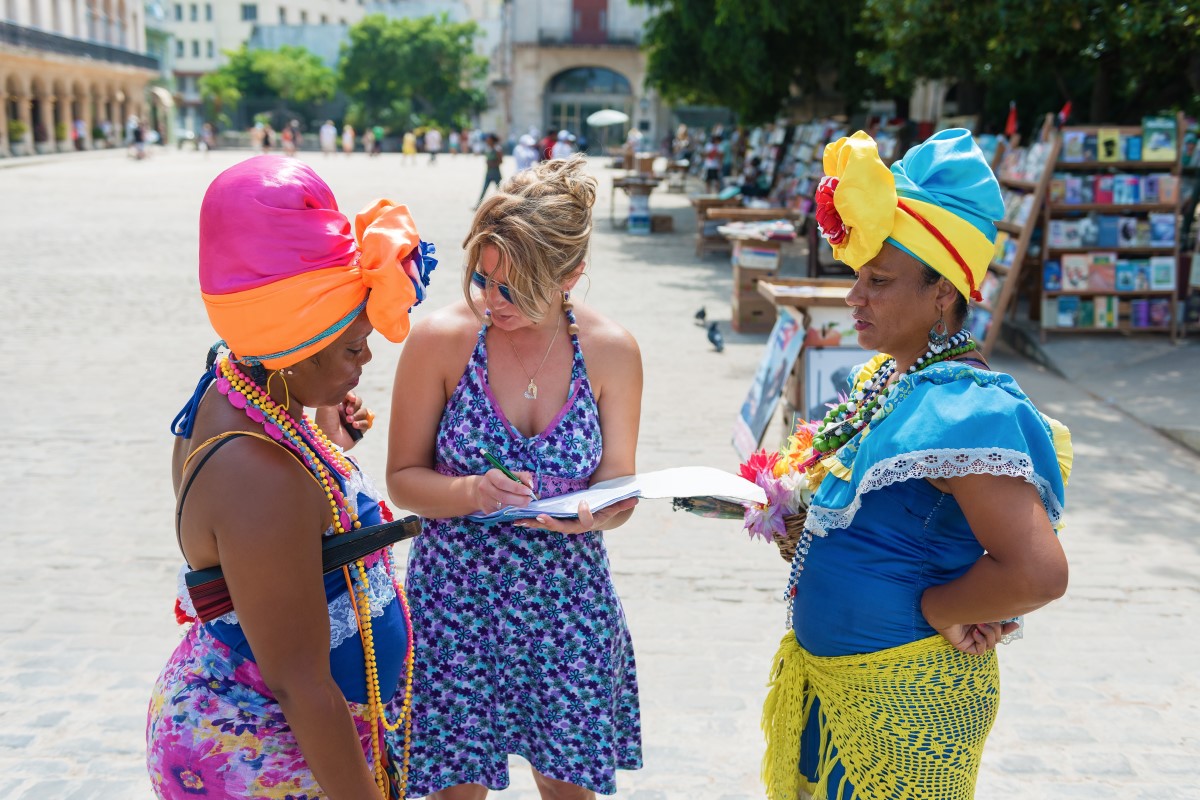
On the other hand, it might be challenging for foreigners to understand Creole, especially if they are not native English speakers. So, if you are getting ready to be an expat in the Caribbean, and English (or French, or Spanish) is not your native language, buckle up because you might need to take some Creole lessons.
Which Caribbean islands speak English?
Former British Colonies Boast a Rich Linguistic Landscape
Jamaica
Jamaica is the largest English-speaking island in the Caribbean, having been under British control for over 300 years. British expeditions took the island of Jamaica from the Spaniards in 1655, thus securing a strategic position in the Caribbean.
Such a long period under British rule led the country to adopt English as the official language and common law as the legal system. Nevertheless, the most widely spoken language in the country is Patois, spoken by 2.7 million Jamaicans in a country with a population of 2.8 million.
Few people realize that Ireland and Jamaica share a historical connection that goes back to the 1650s. After the Cromwellian conquest of Ireland, thousands of Irish political prisoners, priests, and laborers were forcibly exiled to Jamaica. They needed it to populate the newly captured British colony. Working closely alongside enslaved West Africans on early plantations, these Irish indentured servants profoundly influenced the island’s culture.
Today, more than 90 percent of Jamaica's population identifies as Afro-Jamaican. Yet Irish ancestry remains the island’s second most common European heritage. This historical blending left a permanent mark on the way Jamaicans speak. The distinct rhythm, musical intonation, and specific vowel sounds of Jamaican Patois still share striking phonetic similarities with regional Irish accents today.
The Bahamas
The Bahamas may not be geographically in the Caribbean Sea, but they share a history and background with the rest of the islands. Their proximity to the US reinforced the use of English, which had already been widely used since the first British colonists arrived in 1648.
Since then and during colonial times, the Bahamas have had English as their official language, which they maintained when they became an independent nation in 1973. Even so, most people speak Bahamian English, or “Bahamianese”.
Trinidad and Tobago
The Caribbean is not only culturally diverse across countries, but also within the nations themselves. Another English-speaking country is Trinidad and Tobago, a twin-island nation with significant cultural differences.
Each island’s colonial history defines these differences. For example, Trinidad was ruled primarily by two powers: Spain and Great Britain. Tobago, on the other hand, was a highly contested territory and at different times under the control of Holland, France, Spain, and the British Crown.
Even though the first ones to arrive in Tobago were the Spaniards, Spanish didn’t take root, and only a faint hint of it survives in modern Trinidadian Creole. A blend of French, Indian, Patois, and dialects from neighboring islands was replaced by English Creole, unfortunately, not by choice. The British colonial system mandated English for all official affairs and used the education system to enforce it.
Trinidad's Spanish roots trace back to 15th-century colonial conquest, but the language truly took hold and endured due to its proximity to South America. Situated 7 miles off the coast of Venezuela, Trinidad has experienced centuries of migration and trade that integrated Spanish into the local culture. Today, most schools teach in both English and Spanish.
British overseas territories
Other sovereign nations with English as their official language are Antigua and Barbuda, Dominica, Barbados, and Saint Lucia, while the Cayman Islands, Anguilla, Bermuda, and the BVI are British overseas territories.
Their cultural landscapes are similar to those on nearby islands, and each offers a fantastic vacation spot or expat destination where you can feel at home.
Whether English is your first language or not, you’ll quickly discover that the Caribbean speaks a universal language everyone understands: hospitality. People are warm and kind by nature, and they will be ready to speak English with you when you find yourself struggling to understand Creole.
So why wait? Buy your tickets, book a hotel, and explore one of the many beautiful Caribbean islands. Before you know it, you may find yourself planning your return, whether for another vacation, a few years, or even a lifetime.